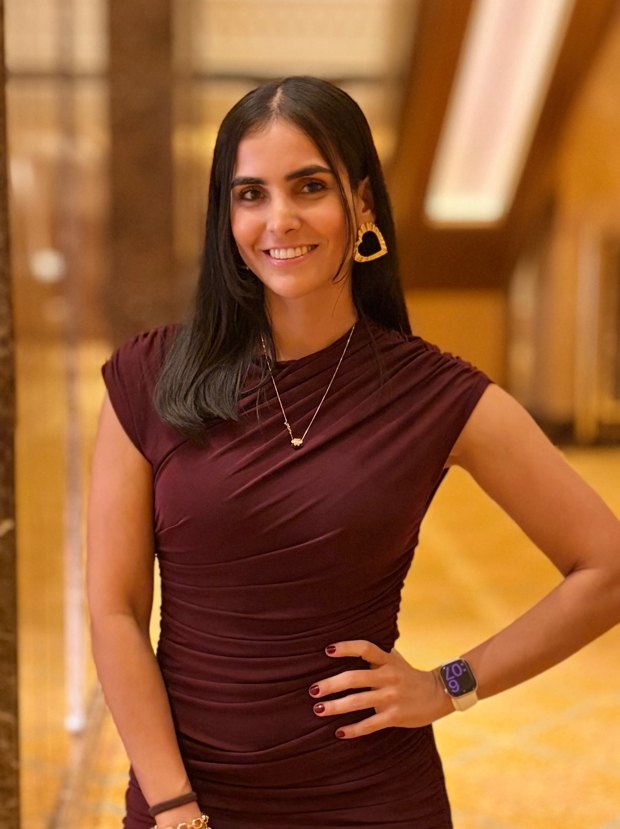
01 · Roots
From Colombia to construction sites
I studied civil engineering, so my first products were buildings. On site and in consulting for oil & gas and real estate, I learned how products really get chosen, installed and used.
I'm a Technical Product & Specification Manager with an engineering background. I've built CRMs, product portfolios and AI workflows across construction, industrial and e-commerce, always with the same method: start from the business metric, find the friction, ship in phases.
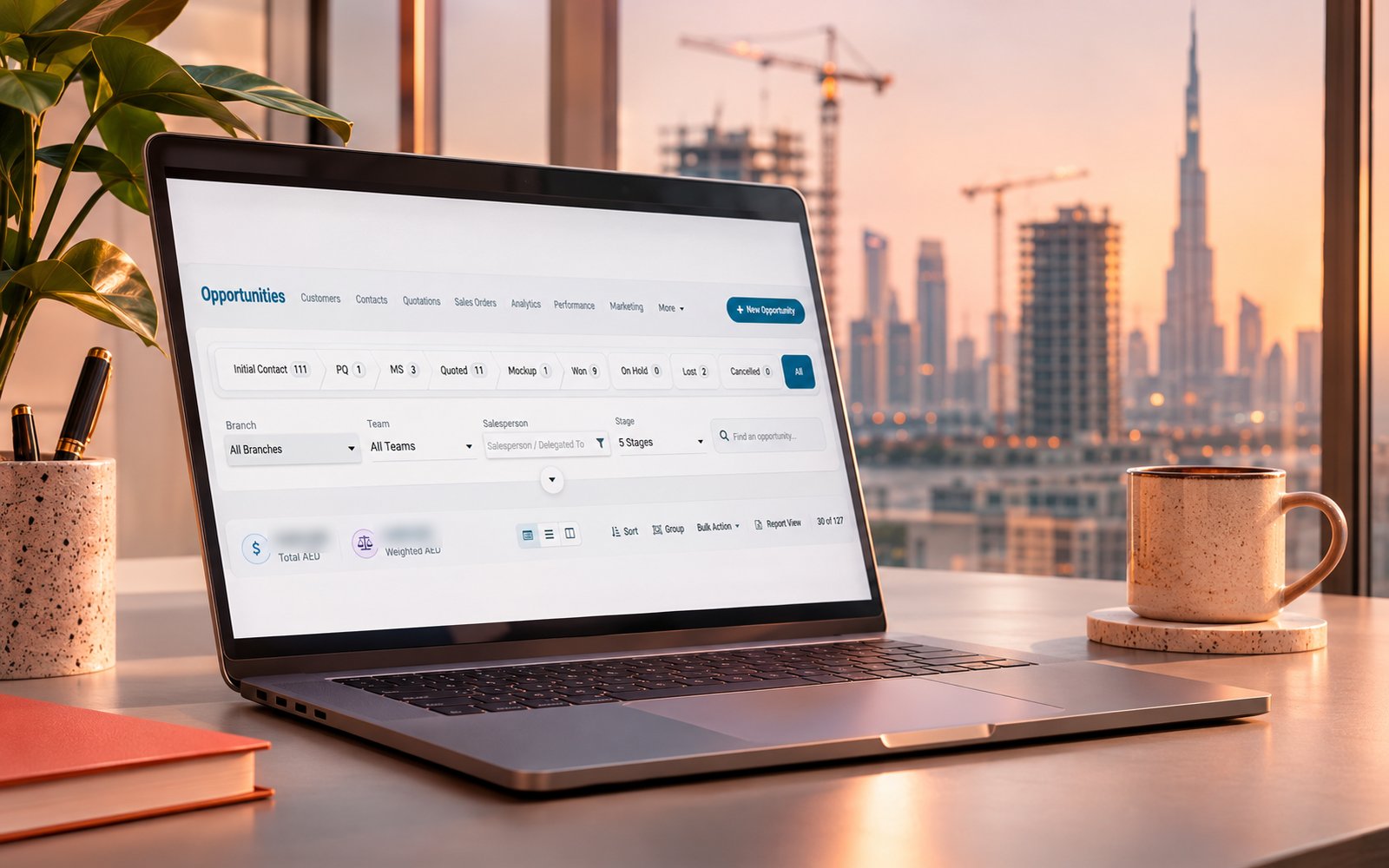
AED 9.5M live pipeline/15 users · 4 teams
I built a CRM from zero around a construction sales cycle driven by approvals.
Explore the case →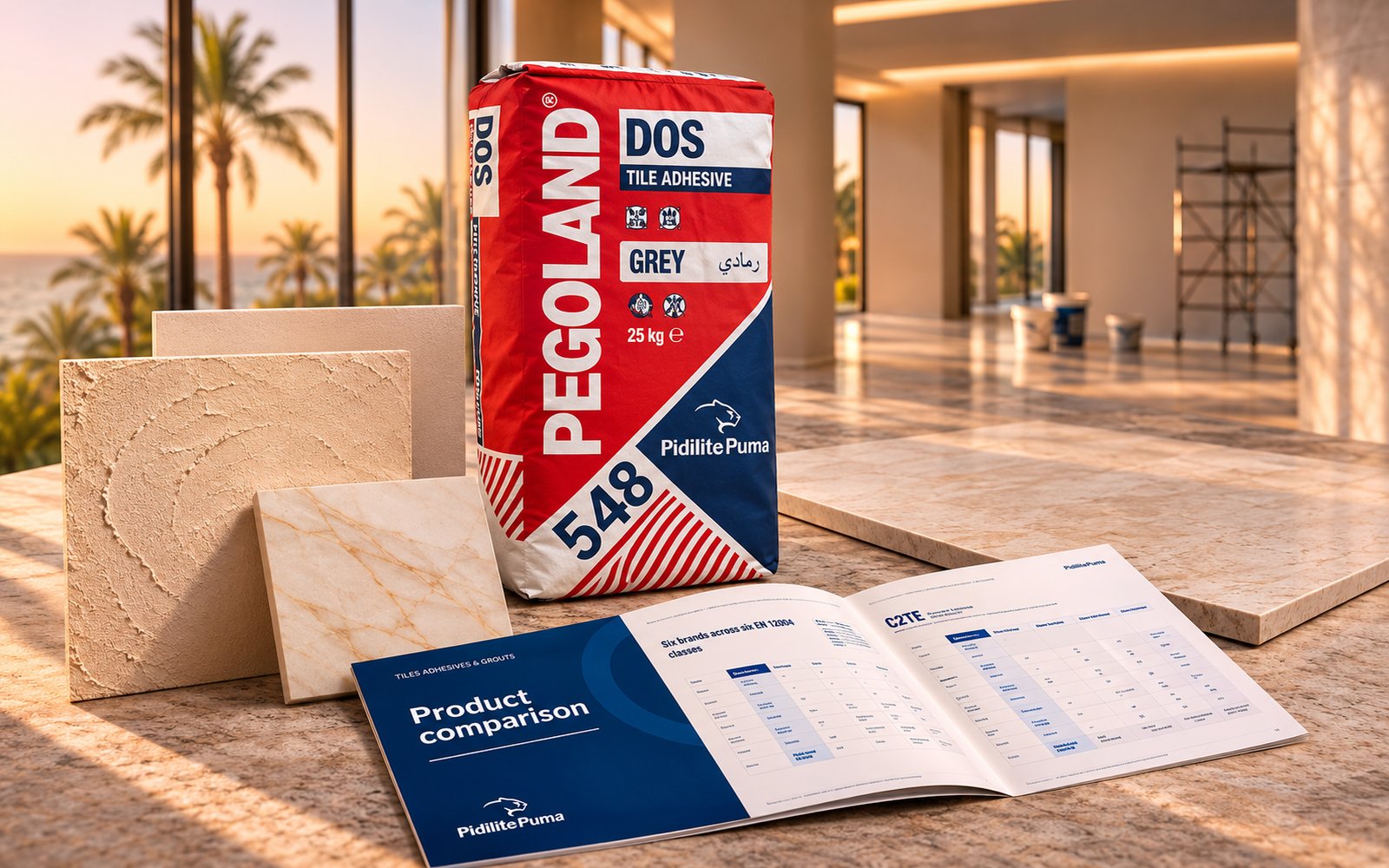
1-2 yrs head start from specification/Full systems per scenario
I adapted a European product range to GCC standards and buyers.
Explore the case →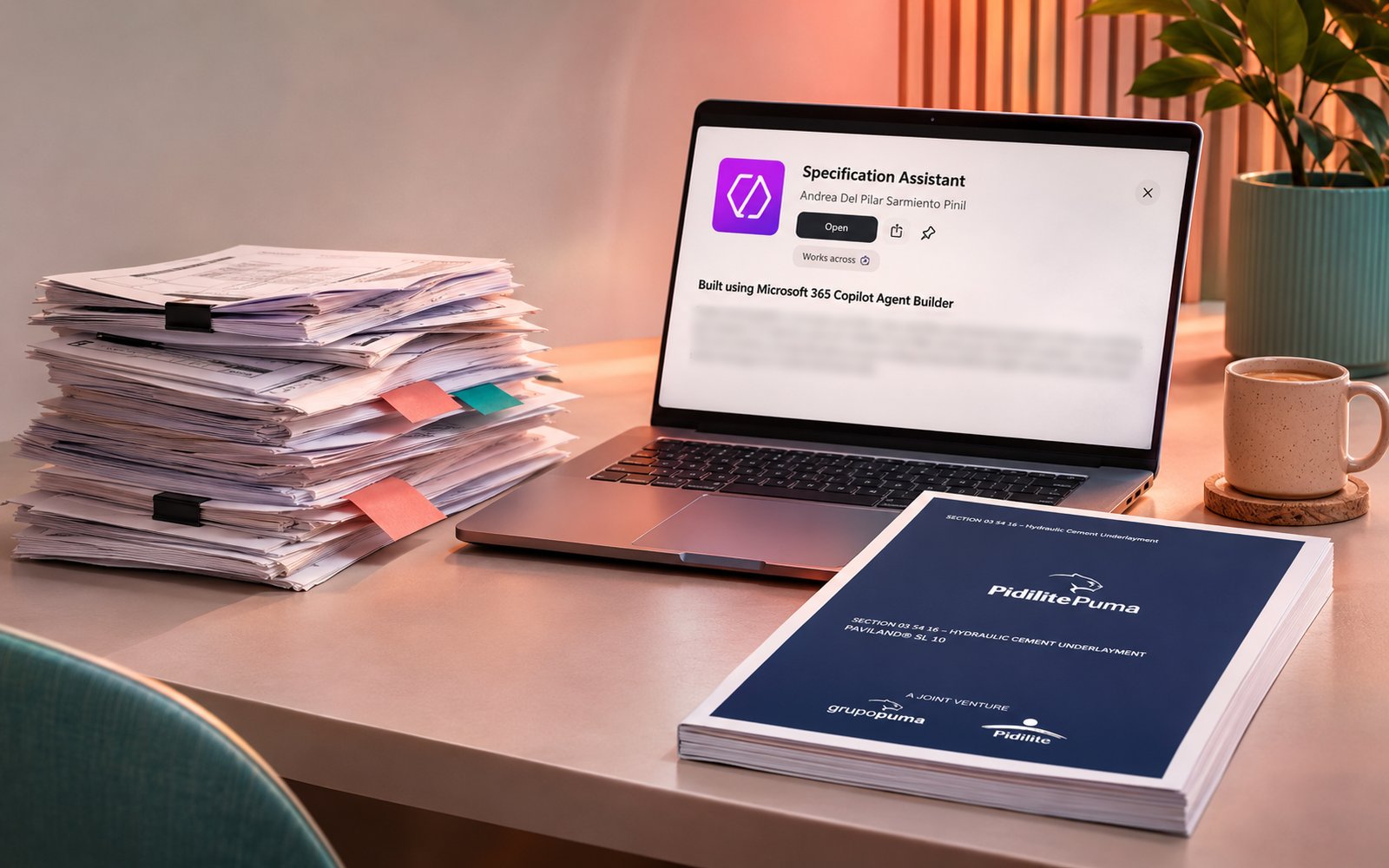
2 AI agents in daily use/No-code: Copilot + Claude
I built two no-code AI agents for specifications and competitor analysis.
Explore the case →Four areas I work across, each backed by the cases above.
Positioning, launches and enablement for B2B and technical products, from training sessions to corporate accounts.
Seen in case 02 →From launch to update: specifications, submittals and method statements that keep products compliant and current.
Seen in case 03 →Raw material, logistics and margin analysis to build pricing structures that stay profitable.
Seen in case 02 →Pipelines, stages and dashboards that make a sales cycle visible, however long or complex.
Seen in case 01 →From pricing in SAP to AI agents in Copilot and Claude: the stack behind my work.
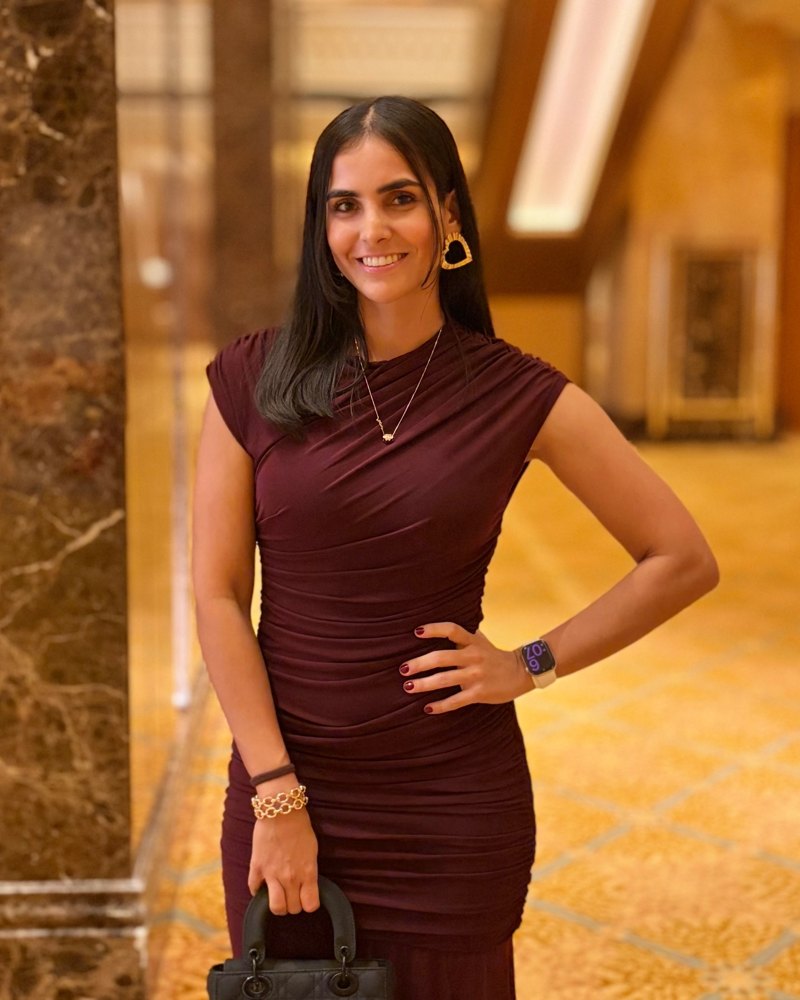
"A product only matters if someone can use it on Monday morning."
I studied civil engineering, so my first products were buildings. On site and in consulting for oil & gas and real estate, I learned how products really get chosen, installed and used.
In Dubai I moved into real estate and CRM, then coatings, and now construction chemicals at Pidilite Puma MEA. That is where product management found me: deciding what to build, for whom, and proving it with numbers.
I connect engineering, R&D, sales and marketing: I can write a CSI specification, give a CPD seminar, model a price in SAP, then design the CRM stage and the AI workflow that track it.
Construction is where I learned the craft, not where it ends. I want to bring the same approach to new products and industries, from industrial to e-commerce and tech.
Pipeline, conversion or hours saved: I decide what has to move before I choose a tool.
I sit with sales, specifiers and managers to see where work gets lost or repeated.
I launch a small first version with real users, then build only what the data supports.
EducationBSc Civil Engineering/Postgraduate Diploma in Project Management/Microsoft AI Product Manager Professional Certificate
Have a product that needs this kind of thinking?
Tell me what you are launching, fixing or scaling. I'm open to product management roles in tech, industrial, e-commerce and B2B, remote or flexible. I'm based in Dubai and work in English and Spanish.
How do you stop losing projects when the sale closes two years after the specification?
Projects lived in personal spreadsheets and were forgotten during a 1 to 2 year sales cycle.
Proposed and rolled out a CRM: clean data, stages designed with sales, live market data and 1:1 adoption.
15 users in 4 teams track an AED 9.5M pipeline in one dashboard.
When I joined, every team worked its own way: personal Excel files, notes and inboxes. We would visit a project and then lose track of it, and by the time someone followed up, a competitor was already in. Reports took days, and managers could not see how many projects we had or who owned each one.
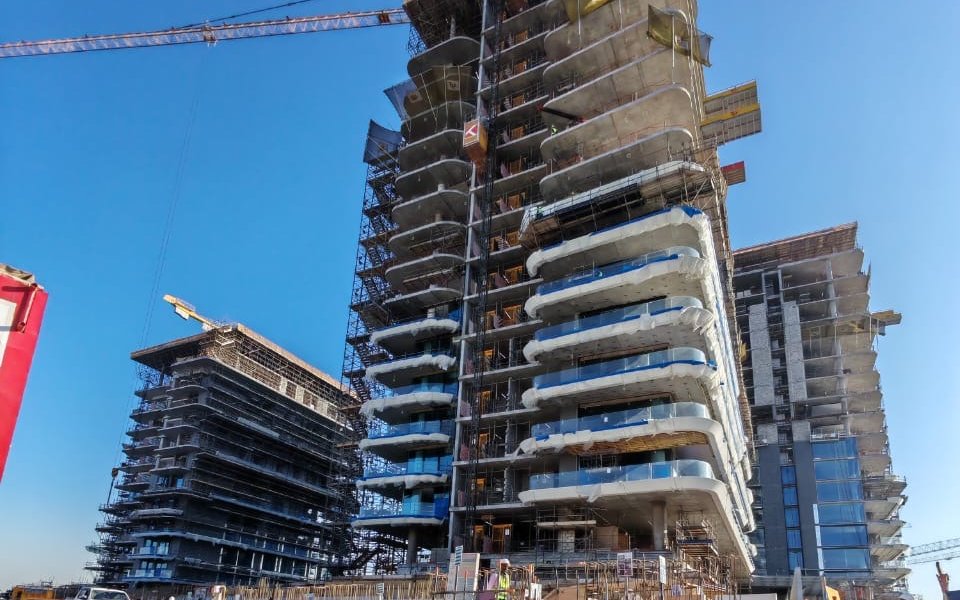
The goal: one place for every account, project and conversation, with one owner per client and a real pipeline value, so the work stays even when someone leaves. HubSpot and Salesforce were over budget, so I chose CorporateStack, a mid-market CRM already used by companies like ours and known to some of my colleagues.
One CRM for every account, project and conversation, with one clear owner per client.
A real pipeline value, stage by stage, that management can check at any time.
Within budget: no HubSpot or Salesforce, a mid-market CRM the team could adopt.
Our sale closes 1 to 2 years after specification. A forgotten project is a lost sale.
Proposed the CRM and chose the platform within budget
Cleaned and migrated ~2,000 records with AI
Designed stages, flags and probabilities with the sales team
Ran a 4-person pilot and set up branded quotation templates
Integrated BNC and Apollo for live project data
Trained every user 1:1 and now manage the admin panel
Built the management dashboard
6 phases, in the order they happened.
I had used CRMs before. I first built a small version in Notion, but it could not track the values we needed. Other construction-material manufacturers used the same CRM, with one account per salesperson. Our difference: we sell finishing materials, so the purchase comes 1 to 2 years after the specification, at the very end of the project. Without a system, a project specified today is forgotten by the time it is ready to buy.
I gathered every Excel file and used AI to map them into the CRM import template, removing duplicates along the way. Around 2,000 records went in: accounts, projects, opportunities and sales, assigned to their owners one by one.
I sat with the sales team to agree on the stages that matter and the flags inside each one: approved, on hold, not approved and resubmit, plus a Hot flag for priority projects. The default stage probabilities did not fit construction, so we rewrote them.
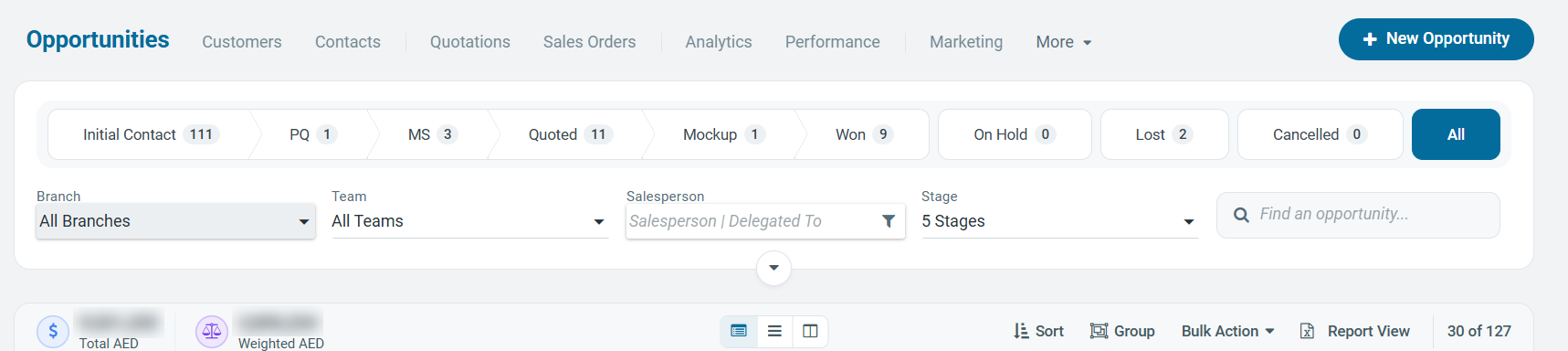
Four of us used it first and fixed what did not work: branded quotation templates, one template per client type, email signatures and fields nobody used. The CRM provider built each change we agreed on. Today I manage the admin panel, and any new field or flag is agreed in a meeting first.
I proposed adding BNC, a project-intelligence platform, and integrated it with the CRM, so a project's status updates on its own as it moves from design to tender to construction. Apollo fills the contact gaps. With both, we got specified on large projects where we were not on the original list.
The hardest part was people, not software. Some colleagues were not digital natives, so I ran inductions and one-to-one sessions to show how the CRM saves them time. When salespeople disagreed over shared clients, we added a contribution field to split commissions, and we are now moving to one owner per account.
15 users across 4 teams track an AED 9.5M pipeline. The dashboard shows how long deals take between stages, value lost each month, who is selling and where deals stall. Close dates tell us when to follow up. Company revenue grew from AED 7M to 15M that year, and the CRM gave sales the pipeline visibility behind that growth.
Adoption is the product. The software was the easy part; the people were the project.
Agree on one owner per account from day one, instead of fixing shared clients later.
I make complex products easy to understand, buy and use.
How do you get an unknown brand specified in a market where price often beats quality?
An unknown European brand entering a GCC market that buys on price.
Repositioned the pitch, rebuilt our documents for the GCC, and sold complete systems and a value line.
Sales targets met in year 1 and 2, and specified on projects such as La Palma and DAMAC Lagoons.
The joint venture brought Grupo Puma's cementitious range to a market that judges products by GCC standards, price and local wording. The plan was to lead with tile adhesives, our core expertise. The problem: architects are not excited by adhesives, and nobody knew the brand.
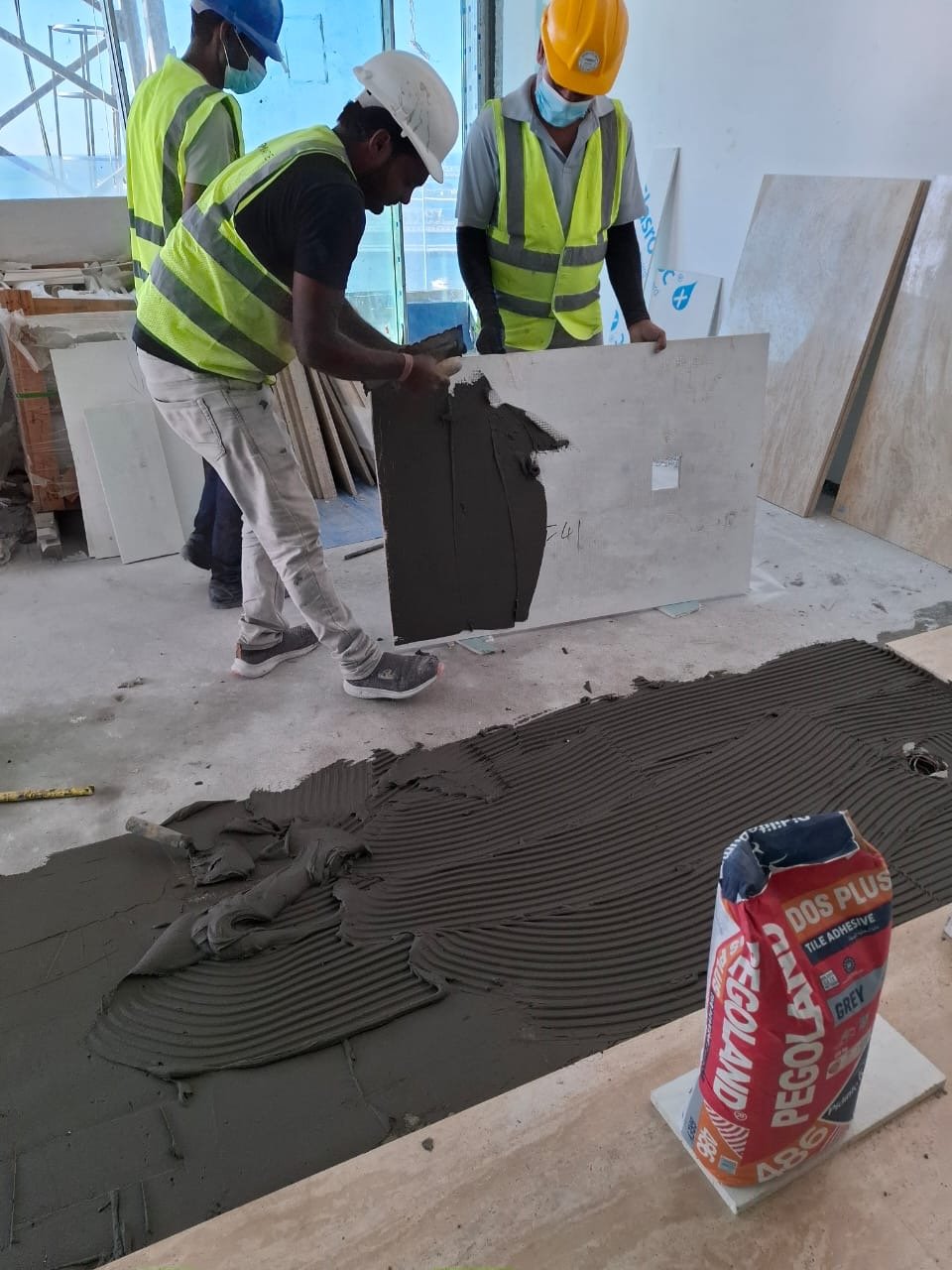
My job: put the brand on consultants' specifications and adapt the range to GCC buyers, with a small team and a product line still being built locally.
Put the brand on consultants’ specifications and make the range fit GCC buyers.
Hit the yearly sales target, starting in year one.
With a small team, samples from Spain and a local line still in production.
Finishing materials are specified 1 to 2 years before purchase. Being specified first means selling later.
Redesigned the pitch for CPD and Lunch & Learn sessions
Restructured the company profile, catalogues and data sheets for the GCC
Supported marketing: event sponsorships and exhibitions such as The Big 5
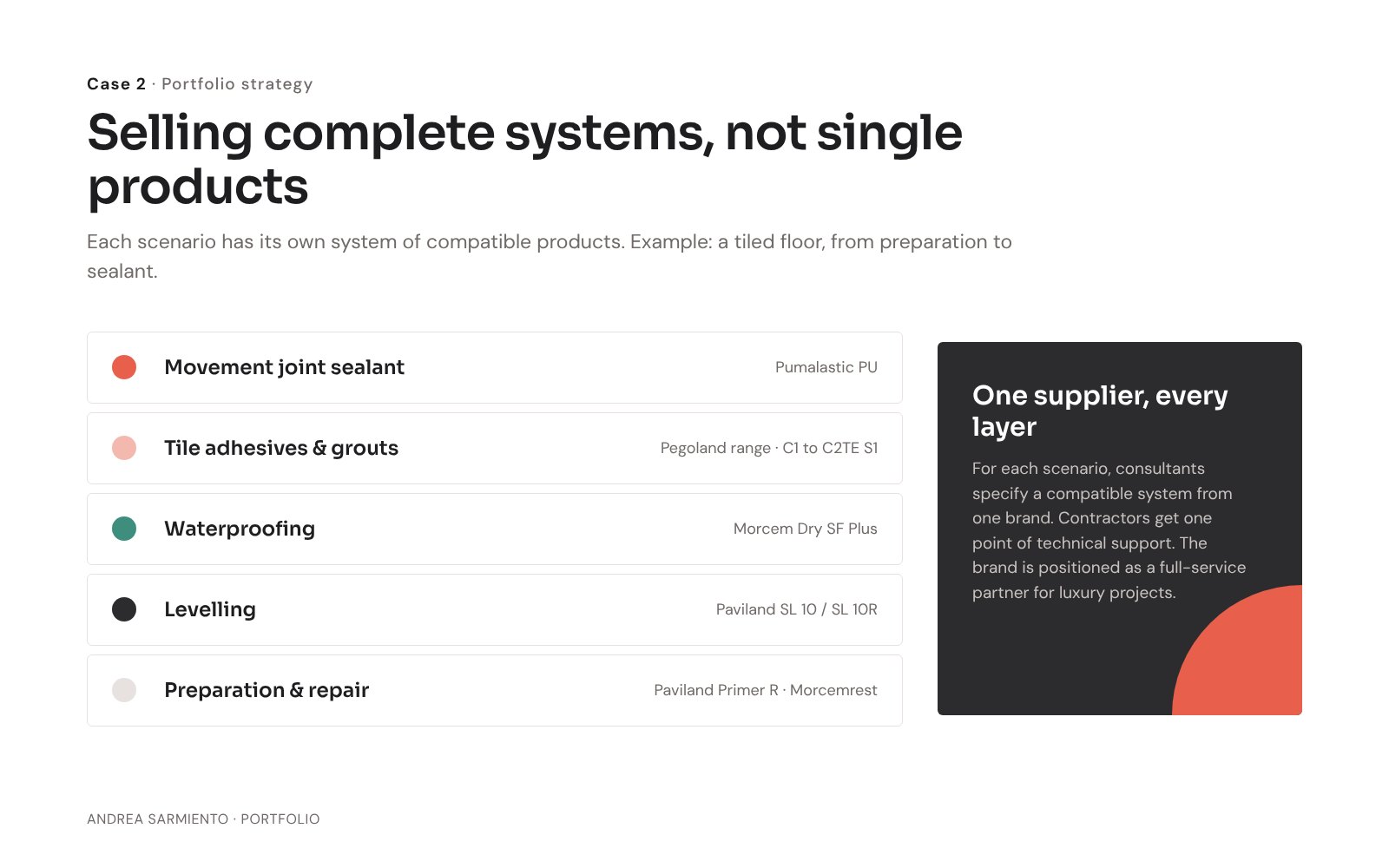
Put together complete systems for each application
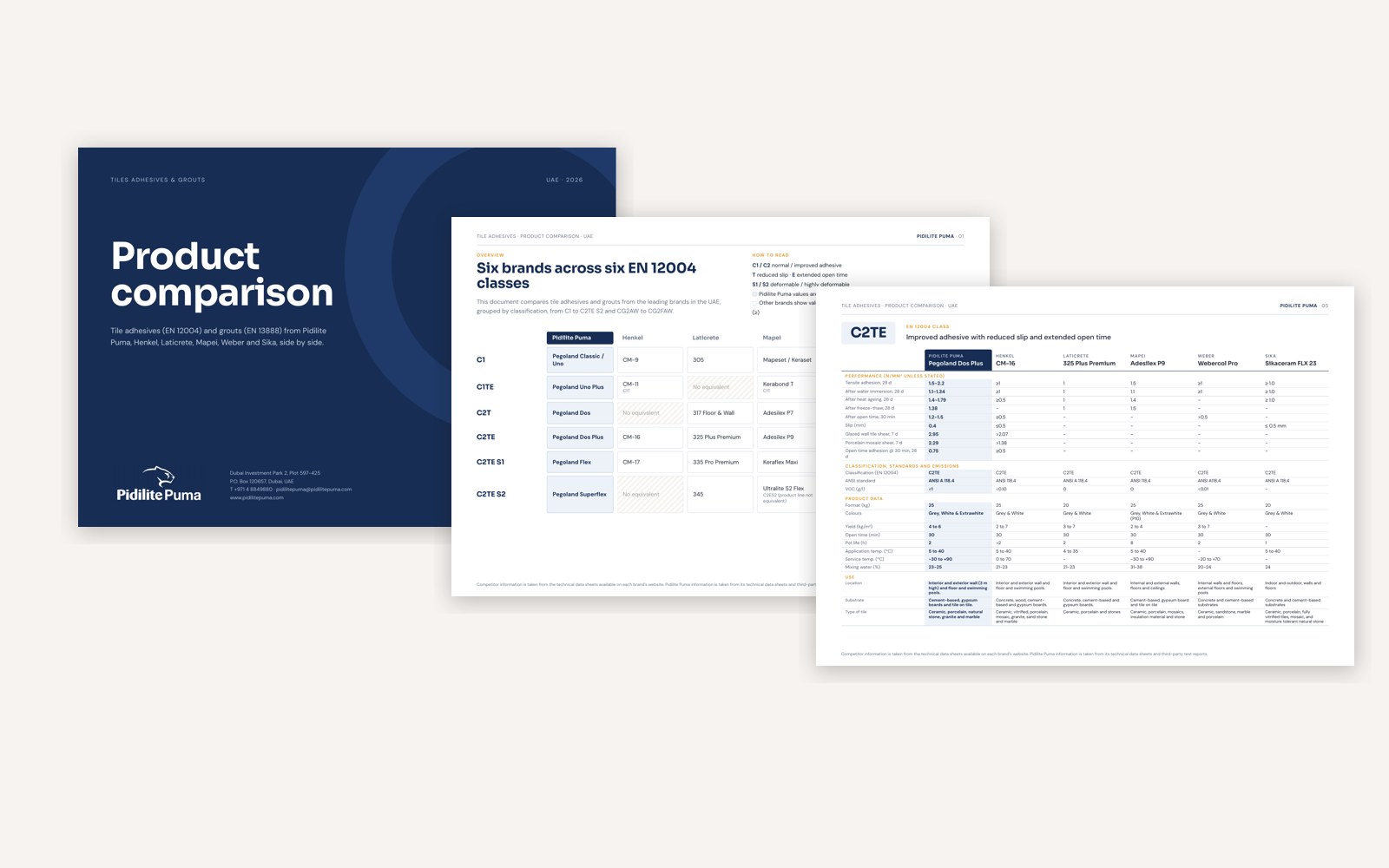
Built competitor comparisons from public TDS
Wrote CSI specifications and technical presentations
Aligned R&D and product teams in Spain and India
6 phases, in the order they happened.
I did not agree with leading with adhesives. I proposed opening Lunch & Learn and CPD sessions with eye-catching products from Spain, like decorative plasters, and closing with the adhesives we make here. I brought my manager to meetings to see the difference, and it became our standard pitch.
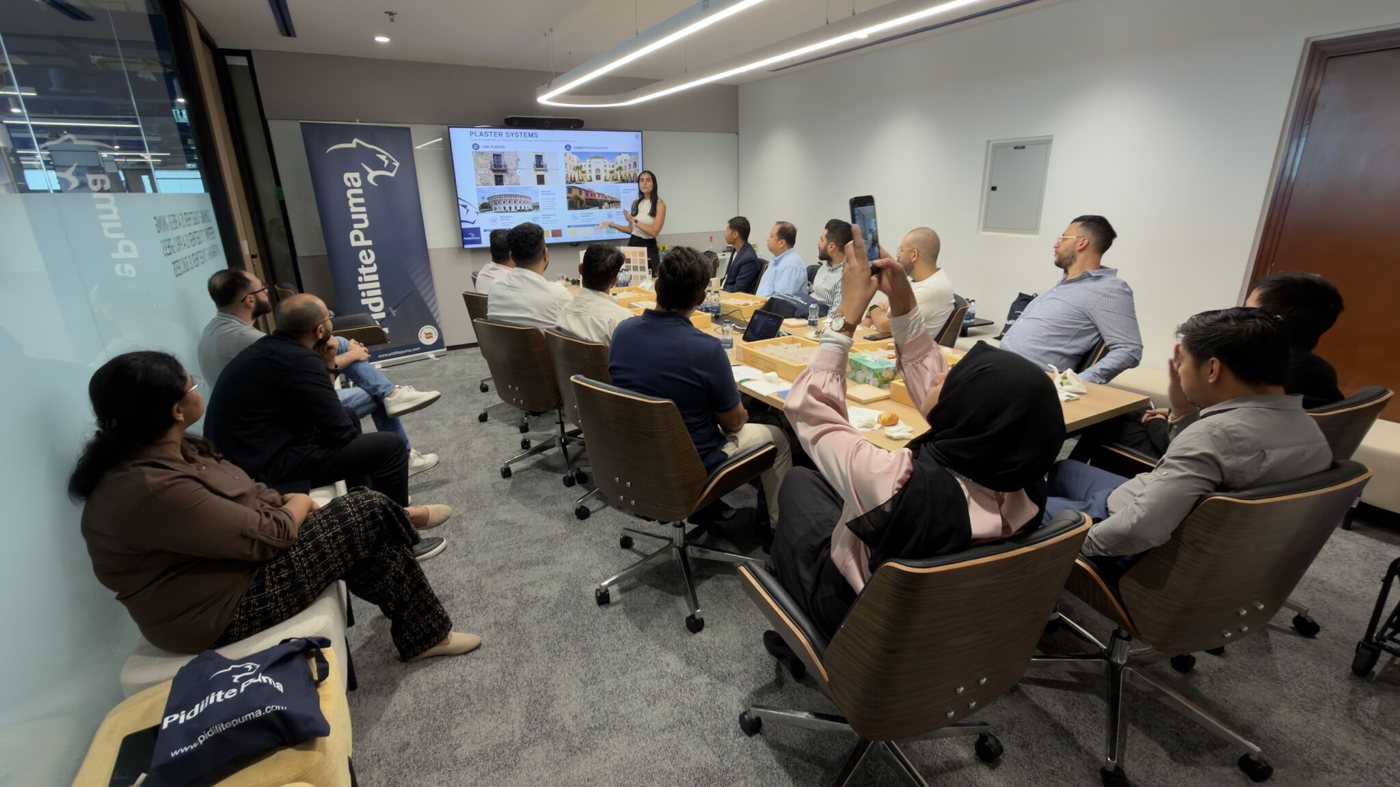
Finishing materials are specified 1 to 2 years before they are bought. So we presented products before producing them locally, using samples from Spain, and were already on approved lists when production started.
Nobody specifies a brand they have never seen. Alongside the technical work, we invested in marketing for visibility: sponsoring industry events and taking part in major exhibitions such as The Big 5 in Dubai, where consultants, contractors and developers meet.
A European company profile and catalogues do not sell in the Gulf as they are. I helped restructure and reconfigure the company profile, the product catalogues and the data sheets for this market. Technical values come from R&D; I changed how they read: local phrasing, units, commas for thousands and GCC standards first, because consultants here care more about GCC norms than foreign ones. Convincing Spain and India took many meetings; in the end, results won the argument, not slides.
With a small team we launched material by material: adhesives first, our core strength, then the products that complete each scenario. Complete systems now open doors to new segments, such as swimming pool contractors.
Our comparisons showed higher quality, but also a higher price, in a market that buys on price. Some products cost too much to produce, so we launched a value line: good performance at a lower production cost. We go to the limit of the standards, never below.
We met our sales targets in year 1 and year 2. Using BNC, Apollo and AI to reach the right people, we were specified on projects such as La Palma in Jebel Ali and DAMAC Lagoons in Dubai, including some where we were not on the original list.
Results win internal arguments, not slides. Proof from the market convinced Spain and India.
Start adapting the documents for the GCC at the same time as the first presentations, not after.
I make complex products easy to understand, buy and use.
How do you cut days of technical writing without losing accuracy?
Each CSI specification and competitor comparison took about 2 days by hand.
Built two no-code AI agents with locked rules, and dropped the ideas that did not earn their place.
1 h per CSI and 30 min per comparison, my review included.
Each CSI specification took me about 2 days, and any new product or TDS revision meant rewriting it. Competitor comparisons took another 2 days and were rebuilt from scratch for every request.
My manager and I proposed Microsoft 365 Copilot for the whole company and organised training for every team. At the same time, I wanted AI to take over my most repetitive technical documents.
AI that drafts CSI specifications and competitor comparisons straight from the TDS.
Time per document, down from about 2 days.
No-code: the company Copilot licence plus Claude, no developers.
Every new product or TDS revision meant rewriting documents by hand.
Proposed Copilot company-wide and co-led the training
Identified which documents took the most time
Wrote the agent instructions and fixed rules
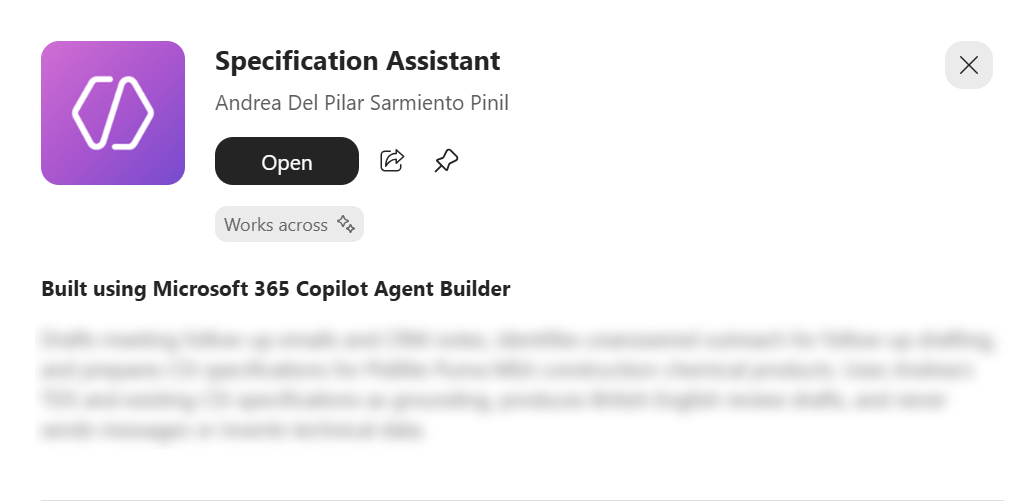
Built the Specification Assistant in Copilot
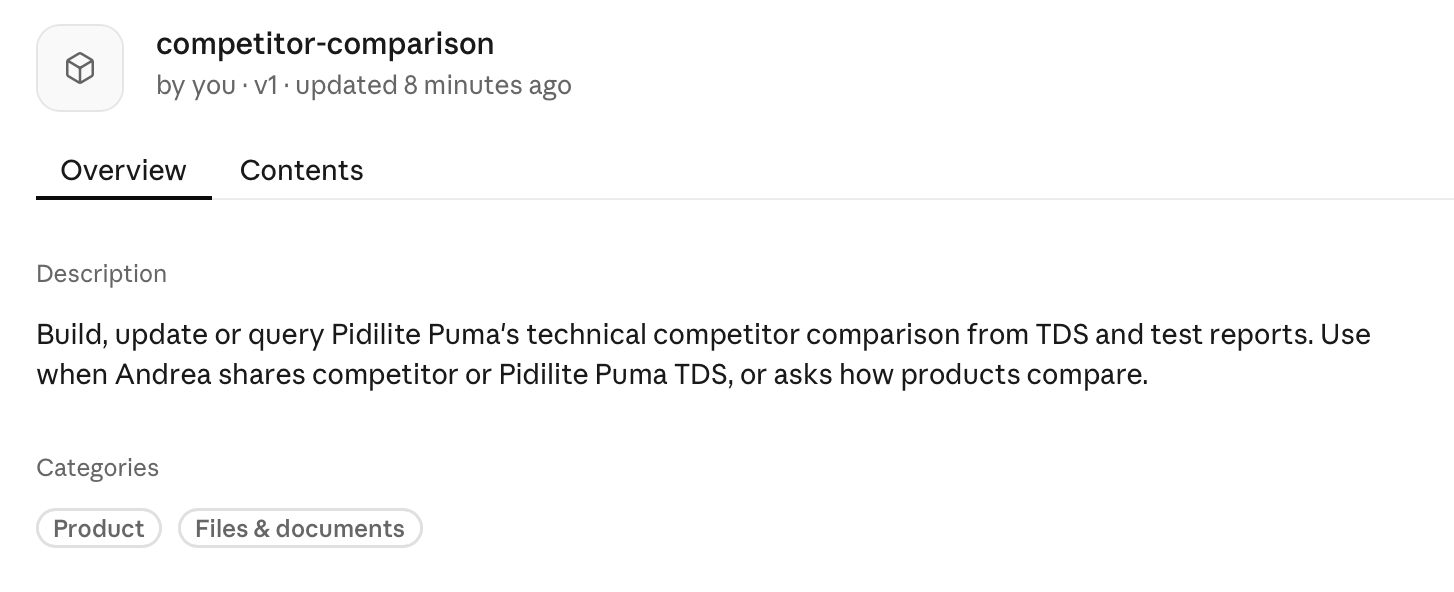
Built the Competitor Comparison skill in Claude
Tested, reviewed and dropped what did not work
5 phases, in the order they happened.
I learned through YouTube, the Microsoft AI Product Manager Professional Certificate on Coursera and daily use of AI at work and at home. I started with ChatGPT, then tested tools for each job: writing, images, agents and code. Copilot is best for internal documents; Claude handles large comparison tables far better.
The first drafts had errors, so I gave the agents rules: copy TDS values and fixed wording exactly, follow my CSI structure, and write "To verify" when data is missing. The agent drafts; I review, adjust and approve.
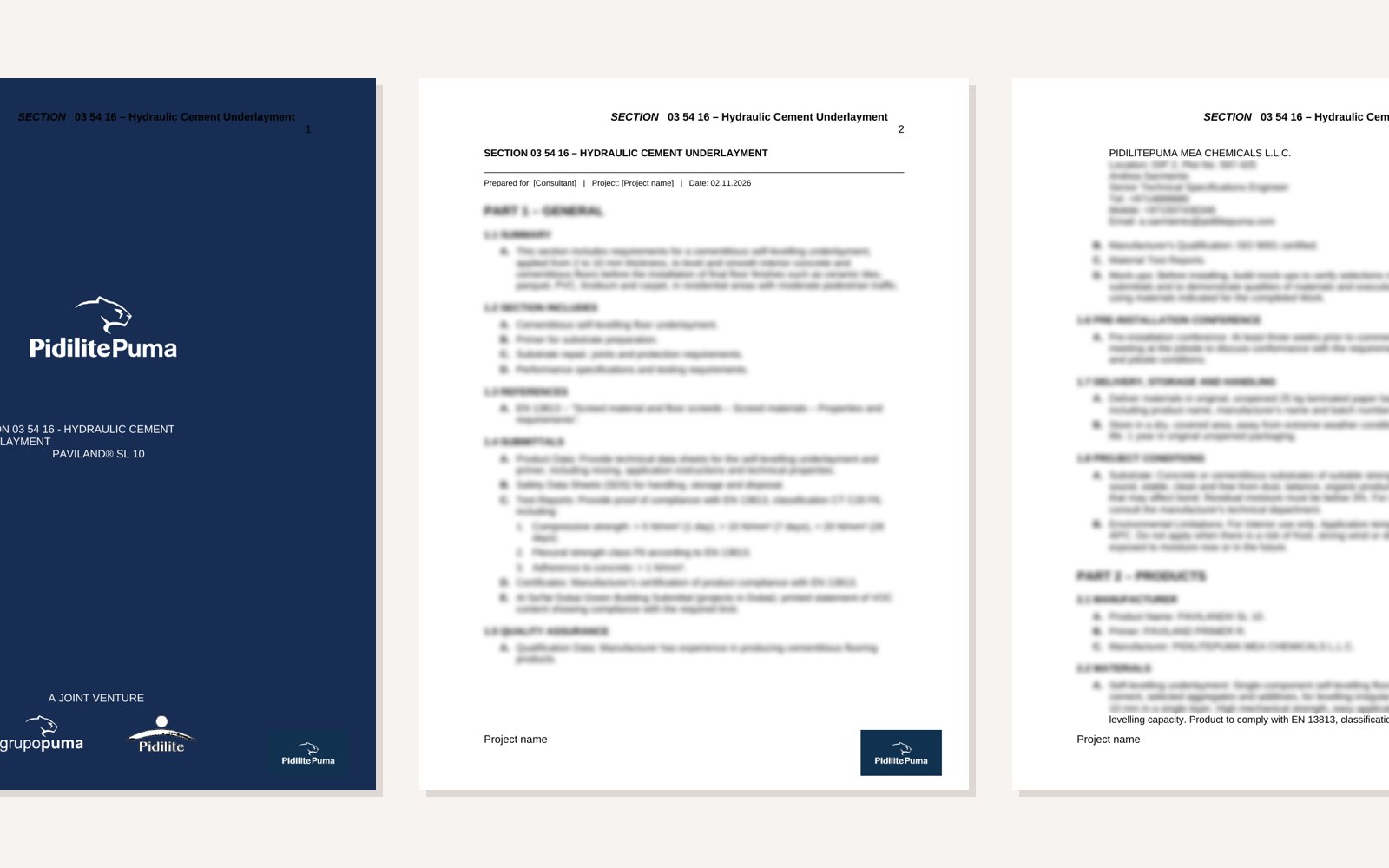
It runs in Agent Builder on the company licence, so internal documents stay inside Microsoft 365, and it writes the full three-part CSI specification from the TDS in our company format.
It keeps one living comparison of 6 brands, organised by EN classification. It answers quick questions, such as us vs. one brand, and logs every change when a TDS is revised.
A submittal agent handled a sales task but still left the PDF assembly to do by hand, so I dropped it. A product selector for sales was too risky without an engineer checking the answers.
CSI specifications went from about 2 days to 1 hour including my review, and competitor comparisons from 2 days to 30 minutes. My role moved from writing to technical judgement.
The AI builds the comparison from each brand's TDS. Pick a class and a competitor to see the kind of answer it gives, with real values in N/mm².
Each AI is good at something different. Pick the tool for the task, not the other way round.
Write the locked rules before the first draft, not after the first errors.
I make complex products easy to understand, buy and use.